

TYD2505 Solar Post Top Lights for Courtyard Upgrades
A practical look at TYD2505 for courtyard upgrades, covering solar and AC options, site planning, pole compatibility and purchasing requirements.
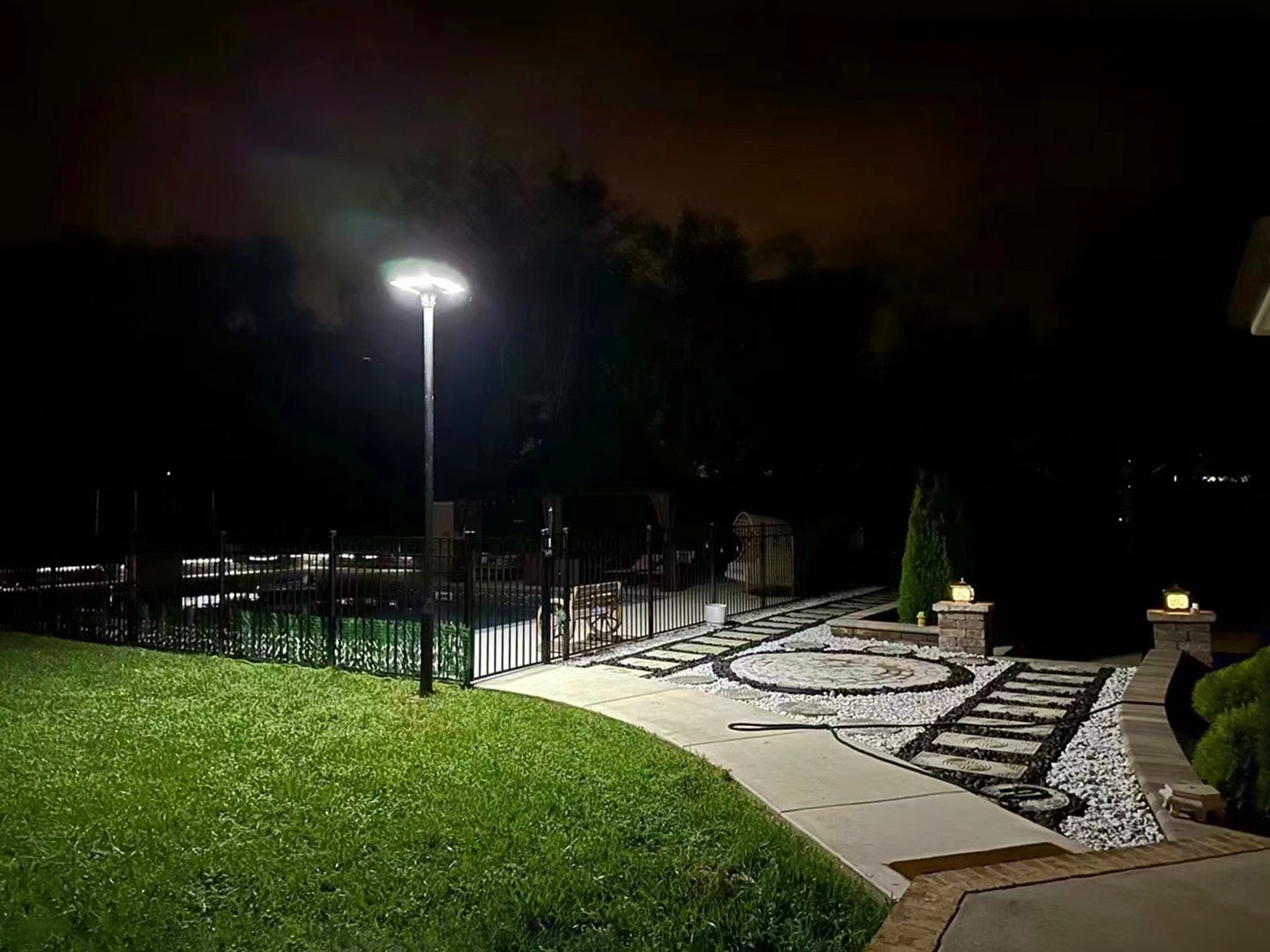
YMG's TYD2505 solar post top lights give landscape contractors and property teams a solar option for courtyard upgrades. The model also has a separate AC assembly. Choosing between them depends on daylight exposure, available power and how people use the space after dark.
The route from a garden gate to a front door may need a different approach from a shared seating area. This update covers the supply options, site planning, pole compatibility and purchasing details that help turn a courtyard lighting brief into a workable project.
Start with the routes people actually use
A useful site lighting plan marks entrances, changes in direction, steps, seating and the edges of planting. It should also show existing fixtures, trees, buildings and windows. These details reveal where garden pole lights could serve a purpose and where another position may work better.
For residential pedestrian route lighting, follow the journey from the entrance to each destination. Walkway junction lighting deserves particular attention where paths split or meet a doorway. Courtyard seating area lighting needs a different review, including the view of the lamp from a seated position.
This is a practical approach to pedestrian scale lighting. Mounting height and output should suit the walking environment, while leaving access clear for residents, visitors and maintenance staff. A landscape lighting retrofit should begin with those needs before settling on the number of new fixtures.
Solar or mains lighting for a courtyard?
TYD2505 is offered in two distinct electrical versions. The solar model combines a top-mounted panel with a built-in LiFePO4 battery. The AC model uses a mains supply. Select the assembly first, then compare its output and installation requirements.
The following values come from the TYD2505 product details and English specification.
| Specification | Solar assembly | AC assembly |
|---|---|---|
| Rated power | 48 W | 80 W |
| Listed input | DC 3.2 V | AC 220–240 V |
| Luminous flux at 3000 K | 3,539 lm | 9,296 lm |
| Luminous flux at 6500 K | 3,636 lm | 9,411 lm |
| Solar panel | Monocrystalline, 48 W / 5 V | Not applicable |
| Battery | LiFePO4, 3.2 V / 60,000 mAh | Not applicable |
These are specification values for the separate assemblies. They do not establish the brightness at a particular point on a path. That depends on the layout, mounting height and light distribution.
Solar courtyard lighting is worth evaluating where daylight exposure is suitable and extending a mains circuit would complicate the work. Solar lighting for existing courtyards still requires suitable mounting, foundations and access for service.
An AC version may be more practical where a suitable supply already exists or trees and buildings limit solar exposure. Comparing solar and AC garden lights early helps an outdoor lighting retrofit account for both installation work and long-term operation.
Check solar panel shading throughout the year
A bright garden at midday does not tell the whole story. Review solar panel shading at the proposed lamp-head position during different parts of the day. Include nearby roofs, balconies, mature trees and the likely growth of new planting.
Winter solar charging also needs attention. Local daylight, seasonal weather and the intended lighting schedule affect the energy available for operation. Request a configuration review using the project's location and required nightly schedule before agreeing on an operating expectation.
For garden lighting for shaded sites, compare a sunnier mounting position with an AC installation. Moving a pole should still preserve the intended lighting layout. A panel position that receives more sun may be too far from the route that needs light.
When reviewing LiFePO4 solar garden lights, ask for the battery's charging limits, control settings and service instructions. Battery chemistry alone cannot establish how a complete fixture will perform in a particular winter climate.
Check existing pole compatibility before replacing a head
Keeping sound poles can be an option in a courtyard lighting retrofit, but replacement garden light heads are not universally interchangeable.
TYD2505 lists a lamp-head size of 580 × 580 × H255 mm. Its published connection dimensions are Ø76 mm internally and Ø78 mm externally. These measurements describe the head and connector; they do not confirm that an existing pole is suitable.
Existing pole compatibility also depends on the fixing arrangement, condition of the pole, fixture weight and foundation. Have the installer review these items, including local wind conditions, before ordering. Include a measured drawing and photographs of the existing pole top in the enquiry.
For pole mounted garden lights, a matching visual style is only one selection factor. A confirmed mounting arrangement helps the project avoid adapters, extra site work or a late change in fixture choice.
How to plan garden pole light spacing
Garden light pole spacing should follow the project layout and the selected assembly. A single spacing recommendation cannot account for every path width, mounting height, surface or nearby obstruction.
Request the available light-distribution information for the chosen TYD2505 version. A lighting designer can use suitable data to prepare a photometric layout, which estimates light levels across the planned space. Check route edges, entrances and the areas between poles as well as the points directly beneath them.
For LED post top lights, total lumens are one input to that work. Higher output does not, by itself, establish a better result. Review the layout against the project's requirements, then inspect a sample installation at night before committing to the full quantity.
Apply the layout to the courtyard's purpose
Assess TYD2505 against the practical needs of each setting. The same model can be considered for different project briefs, with the supply and layout reviewed for each site.
| Application | What to review first |
|---|---|
| Apartment courtyard lighting | Routes between entrances, windows facing the courtyard and access for maintenance. |
| Residential amenity lighting | How residents move between gardens, seating and shared facilities after dark. |
| Villa access lighting and garden gate approach lighting | The transition between the gate, entrance path and existing decorative lights. |
| Community entrance lighting | Pedestrian routes, signs and the boundary between vehicle and walking areas. |
| Resort courtyard lighting | Guest routes, seating, operating hours and the relationship with surrounding rooms. |
| Campus courtyard lighting | Evening use, route intersections and consistency with neighbouring outdoor spaces. |
| Commercial courtyard lighting | Staff and visitor access, closing times and the facilities team's maintenance arrangements. |
For shared outdoor space lighting, agree on priorities with the people who manage and use the site. This helps distinguish areas needing regular illumination from spaces used only occasionally.
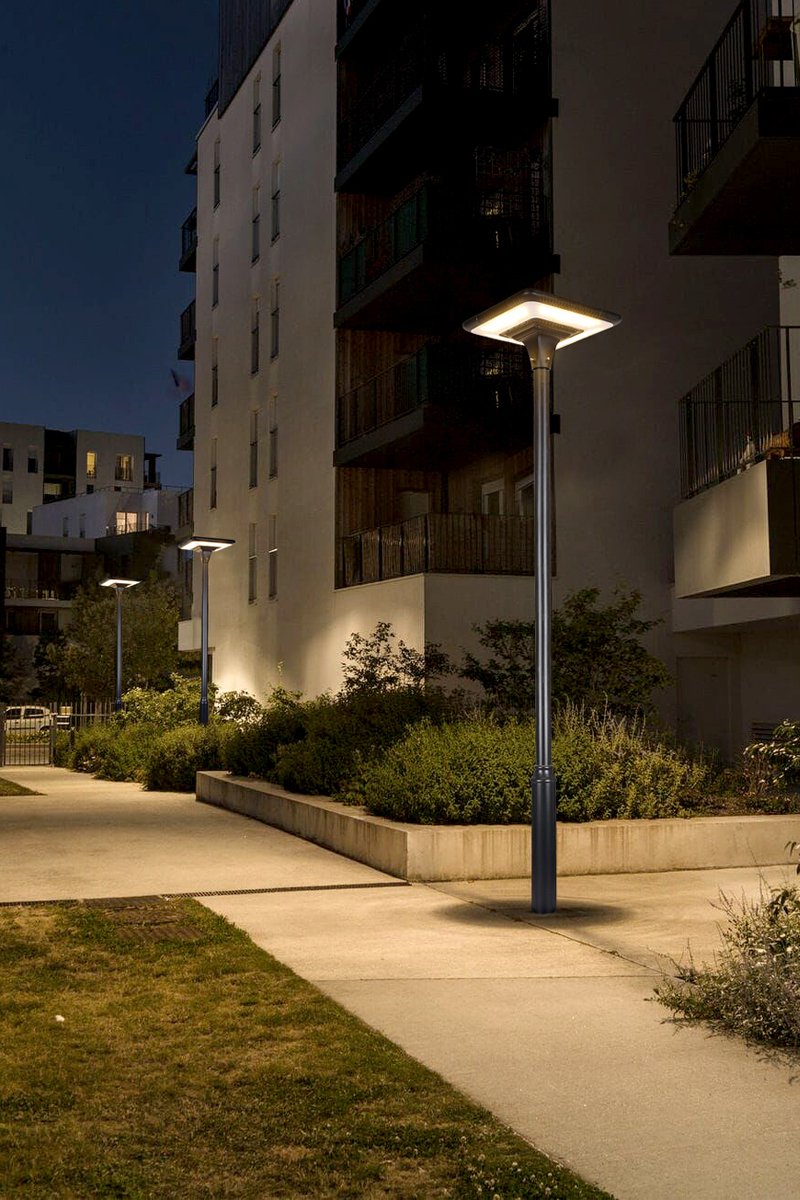
TYD2505's square post top lights can be assessed within a contemporary landscape scheme. The design choice should sit alongside these practical requirements, with the complete garden-light range available for comparison when different spaces need different fixtures.
Choose light colour and review light spill
The illustrated TYD2505 options are 3000 K warm white and 6500 K white light. For a brief considering 3000K garden lighting, review a sample alongside existing entrance and landscape lights. Include the selected colour temperature in the order specification.
Light spill control also requires a site review. Check the view from nearby windows, seating and neighbouring boundaries. Colour temperature alone does not show where the light will fall or how bright the lamp will appear from those positions.
As general planning guidance, the DarkSky and Illuminating Engineering Society lighting principles encourage purposeful lighting, appropriate levels and control of unwanted spill. Apply those considerations to the layout and operating schedule when comparing fixtures.
Include maintenance and commissioning in the plan
Solar lighting maintenance should be considered before the poles are installed. Leave practical access for inspection and follow the supplied instructions for cleaning the panel and optical surfaces. Review nearby planting as it grows, particularly where it could shade the panel.
TYD2505 is listed as IP65. For buyers comparing IP65 garden lights, installation details and ongoing care still belong in the project brief. Request the correct maintenance instructions for the selected solar or AC assembly.
For solar light battery replacement, ask about the compatible battery, access procedure and service arrangements before ordering. This gives the owner a clearer maintenance plan from the start.
A garden lighting commissioning checklist should record the installed version, light colour, pole positions and operating settings. Check the fixtures after dark, review light at entrances and boundaries, and record any adjustments needed before handover.
Prepare an outdoor lighting procurement brief
A clear garden lighting RFQ makes quotations easier to compare. Send YMG the TYD2505 model reference together with:
- Site information: location, a simple plan, path widths, trees and nearby buildings.
- Electrical choice: solar or AC, available mains supply and required lighting hours.
- Mounting details: proposed pole height, measured connection dimensions and any poles being retained.
- Appearance: light colour, housing finish and sample requirements.
- Order information: quantity, destination market and requested delivery schedule.
For bulk garden light orders, agree on a sample configuration before the full purchase. Ask which drawings, test documents, packing details and spare parts information are available for that configuration.
When comparing a post top light manufacturer for an OEM garden lighting project, include the same brief with each enquiry. YMG's OEM order checklist provides a starting point for preparing these requirements.
Questions buyers ask about solar post top lights
Can solar garden lights work under trees?
Suitability depends on the daylight reaching the panel, including seasonal shade. Assess the proposed position before choosing the solar assembly. Where exposure is insufficient, review another pole position or the separate AC version.
Can existing poles be reused for garden lighting?
Possibly, after checking the connection, fixing method, pole condition and structural suitability. Provide measurements and photographs for review. A similar pole diameter alone does not confirm compatibility.
Does a higher lumen figure mean fewer poles are needed?
Not necessarily. Pole quantity also depends on mounting height, light distribution and the areas the project needs to illuminate. Compare layouts using data for the selected assembly.
Are solar and AC versions interchangeable at installation?
They are separate assemblies with different electrical requirements and published outputs. Specify the required version before ordering, and have the installer confirm the mounting and supply arrangements.
Discuss your TYD2505 courtyard project
For a new courtyard or an upgrade to an existing landscape, begin with the site conditions and the intended evening use. Then confirm the supply, mounting, light colour and layout.
View TYD2505 specifications or send YMG your site plan and project requirements to discuss the configuration for your project.