

Commercial Pathway Lighting with GGD002 Garden Lights
A planning guide for GGD002 in waterfront and shared landscapes, covering route layouts, configuration choices, maintenance and a clear project brief.
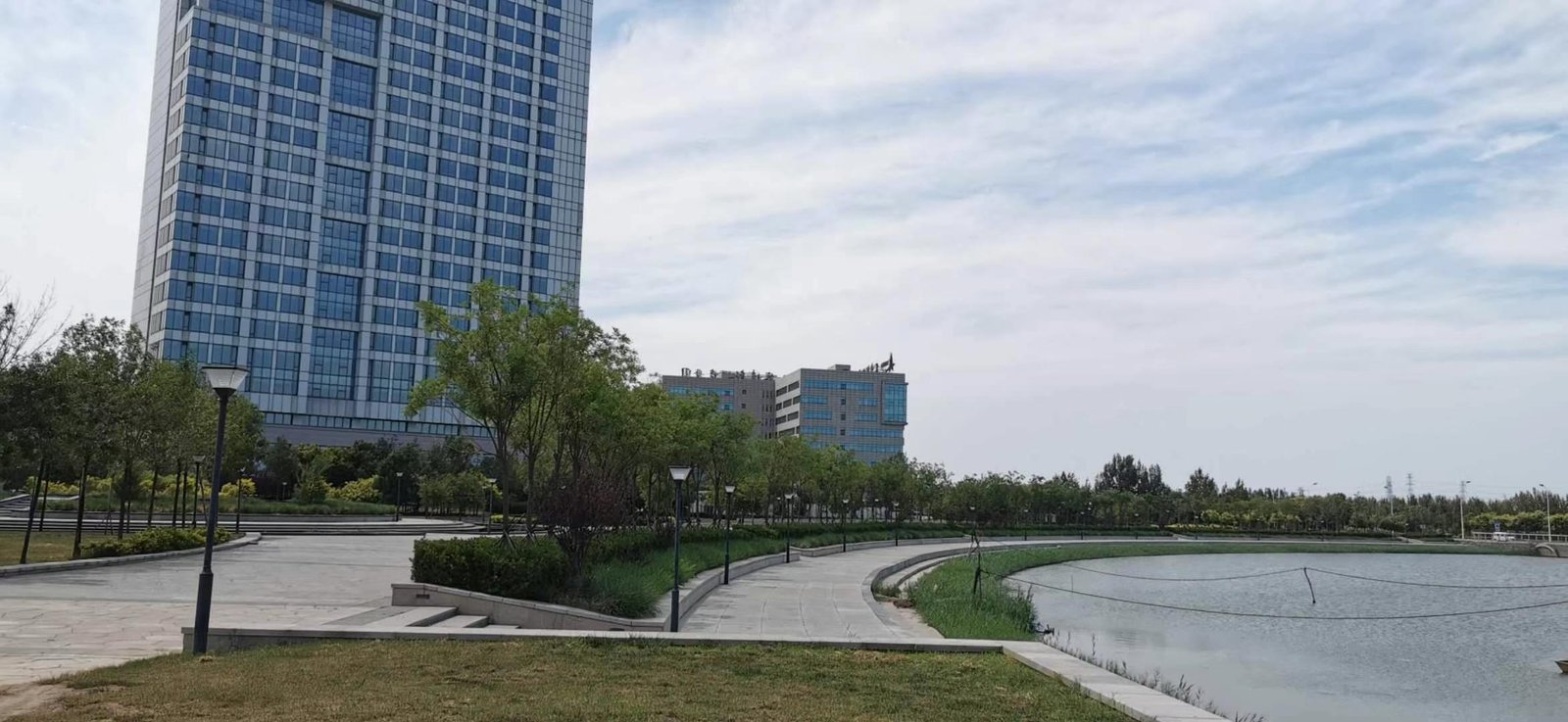
Commercial pathway lighting starts with the route people need to follow after dark. A curved waterfront path and an open plaza each need a clear plan for pole positions, light distribution and operating hours. Agreeing those requirements early helps buyers prepare a quotation that covers the intended installation.
The supplied GGD002 photographs show garden post lights in waterside and planted outdoor settings. This guide connects those settings with documented product configurations and the checks a project buyer should make. It covers the lighting plan, sample review, maintenance records and purchasing brief.
Start with a connected pedestrian route
A site can contain several lighting tasks within a short walking distance. A person may leave a building, cross a paved forecourt, turn onto a narrower path and reach a seating area. Mark those transitions on the site drawing. Include entrances, junctions, steps, ramps and places where pedestrians meet vehicles.
For public realm lighting, agree which spaces remain open after dark and who maintains them. A route used throughout the evening needs a different operating brief from a garden that closes at a set time. Record those hours before discussing controls or an expected solar operating period.
This route-based approach also applies to campus walkway lighting and residential community pathway lighting. Show the actual walking connections, nearby windows and existing luminaires. A continuous route on the drawing gives the project team a clearer basis for reviewing gaps, changes in brightness and the number of fittings required.
Plan waterfront pathway lighting around its surroundings
Waterfront pathway lighting needs a defined area to illuminate. Mark the walking surface, the water’s edge, planted margins and any neighbouring property. Identify where people stop to look across the water, since their view of a luminaire may differ from the view of someone walking past it.
For waterfront promenade lighting, include the width and curvature of the route in the brief. For lakeside walkway lighting, show trees, waterside seating and changes in level. These details help the designer assess the direction of light and the relationship between the path and its surroundings.
Other shared landscapes bring their own priorities. Business park landscape lighting may link entrances with pedestrian routes through planted grounds. Hotel grounds lighting may connect reception, guest buildings and outdoor seating. Plaza approach lighting should be reviewed where a narrow route opens into a wider gathering space. These are planning contexts to assess for a new project, rather than confirmed identities of the photographed sites.
Bring light spill control into the discussion early. Agree where light is useful and which areas should remain darker. DarkSky and the Illuminating Engineering Society recommend purposeful, directed lighting, appropriate light levels, suitable controls and warmer light where possible. Those principles provide a useful starting point for a project review. Read the responsible outdoor lighting principles.
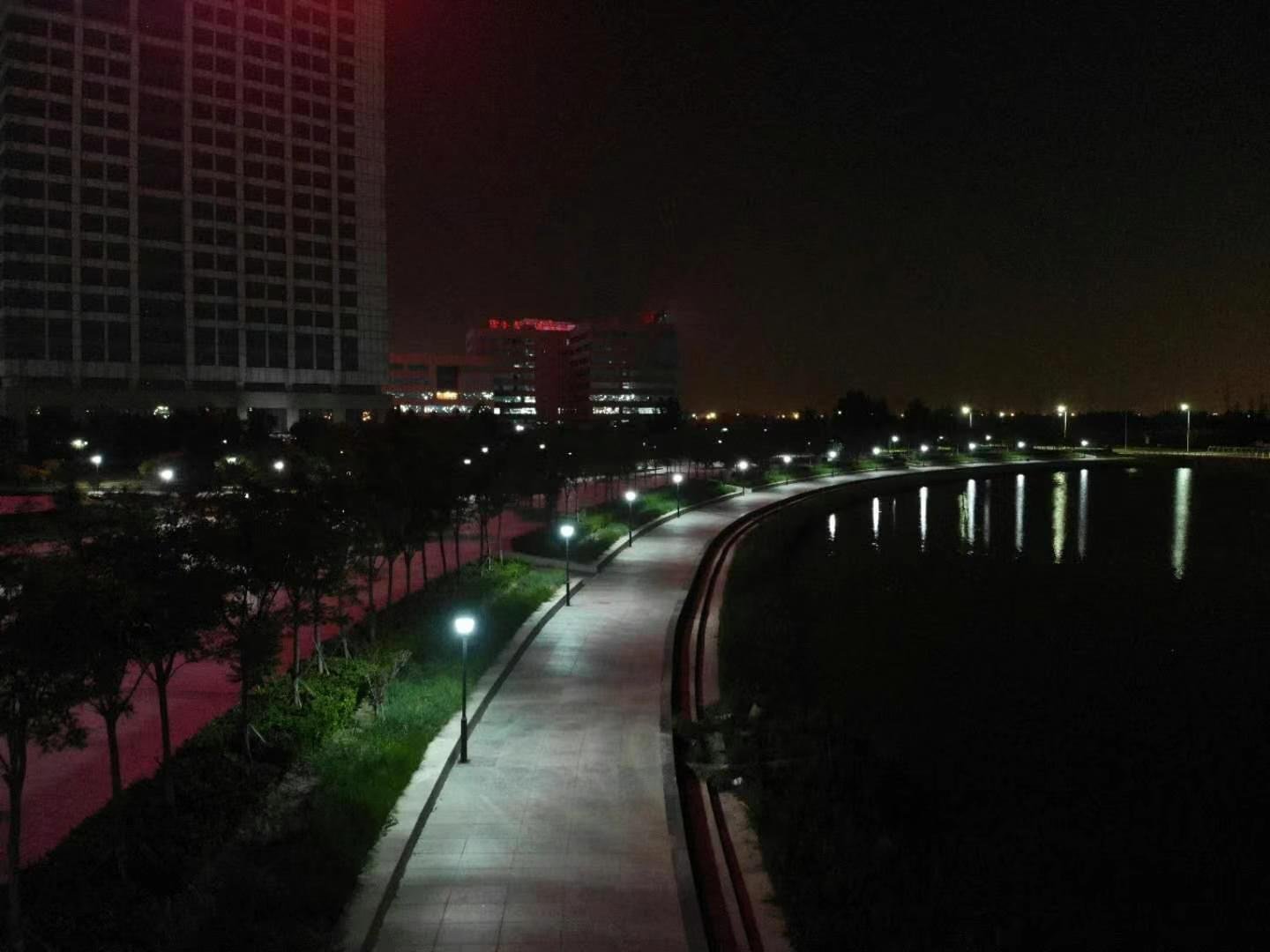
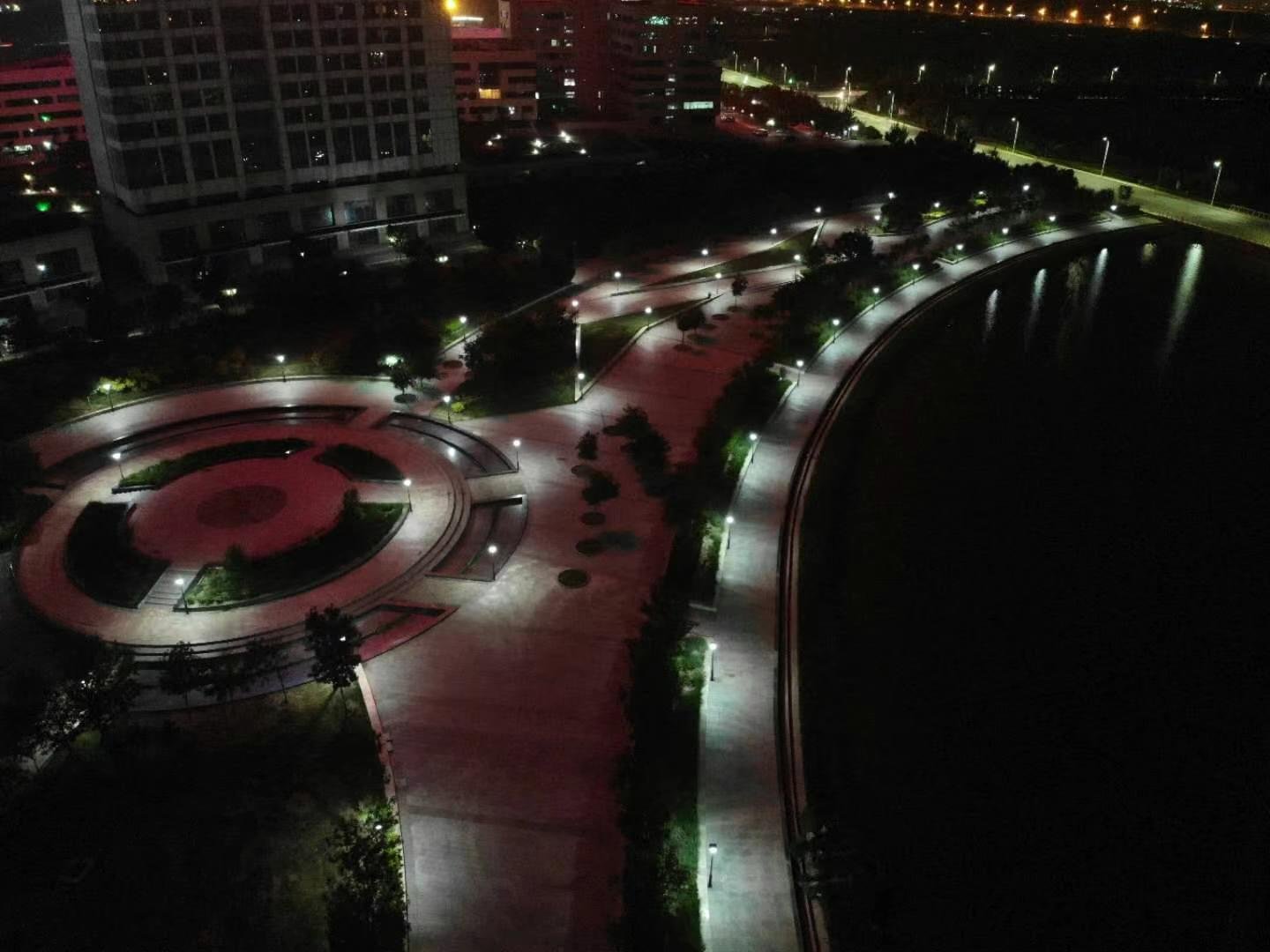
Set luminaire spacing from a lighting plan
For curved walkway lighting, begin with the positions that need particular attention, including bends, junctions and entrances. Ask the designer to review the spaces between poles as well as the area close to each fitting. Copying the apparent spacing in a photograph leaves the path width, mounting height and light distribution unresolved.
A photometric lighting plan uses data for the selected luminaire and its proposed position to calculate light levels. Horizontal illuminance concerns light reaching the walking surface. Vertical illuminance helps assess how people and other upright objects are lit. Lighting uniformity describes how light levels vary across the assessment area. The FHWA Pedestrian Lighting Primer discusses these considerations within a design and verification process.
Ask which photometric files are available for the exact GGD002 size and power version. The project designer can then establish the relevant criteria and assess the proposed layout. The application photographs illustrate placement and setting. Measured light levels and a project calculation are needed to evaluate performance.
Specify the GGD002 configuration before comparing quotations
GGD002 garden lights have two nominal head sizes, 320 mm and 400 mm, with separate Solar and AC assemblies. The English specifications show 3000 K warm-white and 6500 K white-light options. Confirm the size, power version and colour temperature together when requesting a sample.
The following selection details are taken from the two English GGD002 specifications. They identify the relevant configuration and help buyers prepare a consistent schedule.
| Selection detail | 320 mm head | 400 mm head |
|---|---|---|
| Power versions | Solar or AC | Solar or AC |
| Solar panel | 12 W / 5 V | 20 W / 5 V |
| Solar battery | 3.2 V / 12 Ah | 3.2 V / 20 Ah |
| Inner mounting interface | Ø60 mm | Ø76 mm |
| Listed AC input | AC 220–240 V | AC 220–240 V |
Source documents and the complete configuration records are available on the GGD002 product page. Panel and battery entries above apply to Solar assemblies.
Post top luminaires also need a confirmed connection to the pole. A matching nominal diameter is one part of post top light compatibility. Check the fixing arrangement, pole condition and installation drawing with the installer. State whether the quotation should include the head only or a complete pole arrangement.
Choose solar or AC from the site conditions
When considering solar garden post lights, begin with a solar lighting site assessment. Record daylight exposure at the proposed panel position, seasonal shade and the required operating schedule. The panel and battery values identify the assembly. An overnight operating expectation needs a review of charging conditions and the selected control settings.
For mains powered garden lights, ask the project electrician to review the available supply, cable routes and controls. In a garden lighting retrofit, coordinate these checks with the condition of existing poles and foundations. A solar or AC choice should be settled before the project team approves the layout and supply scope.
Review light colour from the user’s viewpoint
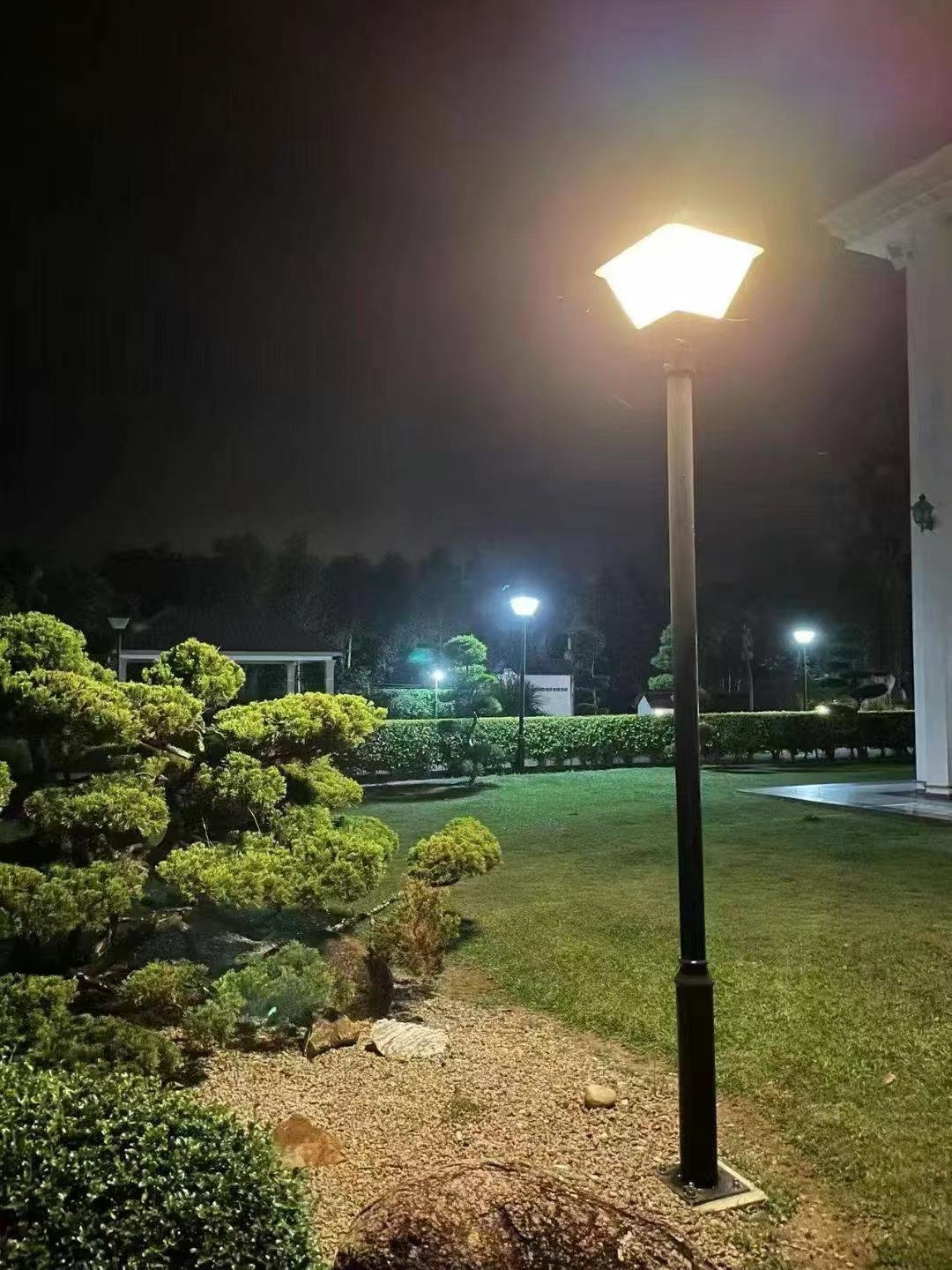
Choose garden light colour temperature alongside the surrounding lighting and intended use of the space. GGD002 offers documented 3000 K and 6500 K options, allowing buyers to identify the required version before sample approval.
For hospitality landscape lighting, review the sample from paths, seating and nearby rooms. Along a waterfront, include the view across the water. Ask the designer to assess source brightness and spill at those viewpoints, and confirm any requirements for the site.
Use a labelled sample to compare light colour. Camera exposure and white balance affect the appearance of night photographs, so the supplied images do not establish the installed colour temperature or measured brightness.
Include maintenance in the procurement brief
An outdoor lighting maintenance plan should identify how staff will reach each fitting, clean it and arrange repairs. Consider access beside planting, steps and water, and agree how routine work will be carried out while the route is in use.
Ask about the availability of garden light replacement parts for the chosen assembly. Record component references, service instructions and the agreed spare-parts scope. For a Solar version, include access to the panel, battery and control components in that discussion.
Keep a lighting asset register showing each fitting’s location, model, size, power version and light colour. This gives the property team a useful record for future orders. A replacement can then be checked against the installed configuration, even if several GGD002 versions are used across one development.
Turn the layout into an outdoor lighting tender specification
A clear pathway lighting project brief helps suppliers quote the same scope. Start with the site drawing and a luminaire schedule. Give each installation zone a reference and connect it to the selected configuration.
- Site and use. State the location, route widths, operating hours and areas requiring assessment.
- Configuration and quantity. Identify GGD002, 320 mm or 400 mm, Solar or AC, light colour and quantity by zone.
- Mounting and supply scope. Include pole details, connection drawings and the components expected in the quotation.
- Design information. List the photometric data, layout review and project documents required for approval.
- Sample and acceptance. Define what the sample should demonstrate and how installed light levels and operation will be checked.
- Delivery and aftercare. Confirm packing, identification labels, delivery destination and the agreed maintenance information.
For commercial garden light procurement, compare quotations line by line against that schedule. Clarify whether poles, anchors, adapters and other installation components are included. Distributors planning OEM garden lighting should also identify the branding and packaging items they want YMG to review.
Questions from project buyers
Can the same GGD002 configuration be used throughout a development?
It can be assessed as part of the lighting design. Check each zone’s task, mounting arrangement and required output. A wider plaza and a narrow path may need different layouts, even when a consistent product appearance is desired.
How should buyers decide between the two head sizes?
Compare the physical dimensions, mounting connection and assembly-specific output data. The 320 mm and 400 mm Solar versions have different panel and battery records. Use the matching specification in the project review.
Do the night photographs demonstrate all-night operation?
They show the illuminated setting at the time of photography. To assess operating duration, request a timed test record for the selected assembly with its charging conditions, mode and output measurements.
What should be sent with an enquiry?
Send the site location and drawing, quantity, preferred head size, power version and light colour. Include existing pole information where relevant. List the documents needed for your approval process and any planned sample checks.
Prepare your GGD002 project enquiry
Use the route plan and configuration schedule to discuss the next step with YMG. Review the garden lighting range for related models, or send your GGD002 requirements for a quotation and sample discussion.